Guides
432 Hz vs 440 Hz: What Actually Changes
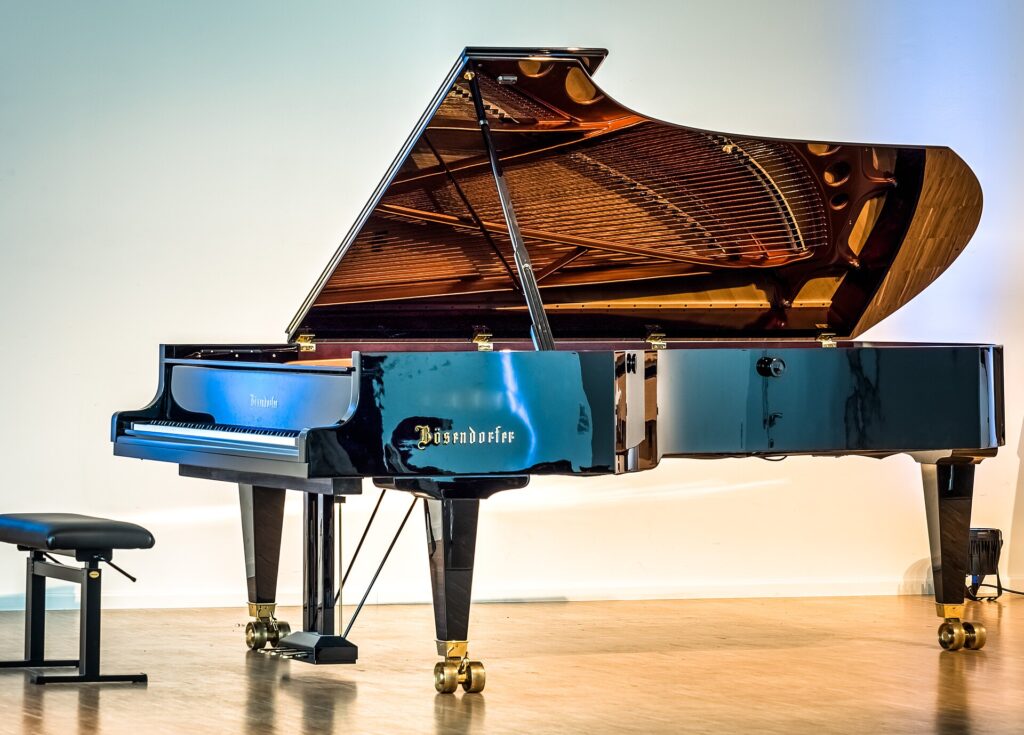
432 Hz and 440 Hz are two tuning references. A4 — the A above middle C — sits at 440 Hz in modern concert pitch and at 432 Hz in the alternative tuning. Tuning an instrument to 432 lowers every note by about 32 cents, roughly a third of a semitone. That is the entire physical difference. Everything else you read about 432 Hz is a claim built on top of that shift.
Worth saying plainly: a third of a semitone is audible as “slightly flat” if you compare side by side, and inaudible as anything else. It does not change the intervals, the harmony, or the way a piece resolves.
What actually changes when you tune to 432
- Everything moves down together. Because the whole instrument is retuned, the relationships between notes stay identical. A major third is still a major third.
- The absolute pitch drops 32 cents. A4 = 432 instead of 440.
- The timbre shifts slightly. On a real instrument, lower tension can change how the body resonates. On a synthesiser, this is a filter setting, not a physical consequence.
- Nothing else. No change in tempo, rhythm, or harmonic content.
That last point is where most 432 Hz content goes wrong. If a recording “sounds warmer” at 432, the warmth usually comes from the retuning process — resampling, pitch-shifting, or a different performance — not from the number itself.
Where the claim comes from
The idea that 432 Hz is “natural” or “in tune with the earth” circulates widely and is repeated more often than it is examined. It usually rests on numerological patterns — dividing 432,000 by various things and finding round numbers — rather than on acoustics or physiology. Round numbers are easy to produce; they are not evidence of anything.
The honest position: there is no body of research showing that 432 Hz tuning produces measurable health or mood effects beyond what any low, slow music produces. Some small studies report listener preferences; preferences are not effects.
None of that makes 432 Hz worthless. It makes it a choice, like choosing a slightly darker reverb.
Why people still prefer it
Three reasons come up repeatedly, and all three are legitimate:
- It sits lower. A 32-cent drop takes the edge off bright material, especially on headphones. That is a real perceptual difference, even if the cause is simply “lower”.
- It forces a re-record or a re-render. Anything tuned to 432 was made deliberately, and deliberate recordings tend to be quieter and less compressed.
- It is a ritual. Choosing a tuning is a way of marking the listening session as different from the rest of the day. Ritual is doing real work here, and it does not need acoustic justification.
440 is not a conspiracy
440 Hz became the standard because it was convenient for instrument makers and broadcasting, not because of a plot. Orchestras still drift: some tune to 442 or 443 for brightness, some period ensembles tune to 415 for Baroque repertoire. Tuning references have always varied by place and repertoire.
So the useful question is not “which is correct” but “which do you want to listen to for an hour”.
Tuning in generated audio
In a synthesiser, tuning is a multiplier applied to every oscillator. Shift the reference and every note moves with it, which is why the intervals in a generated piece survive a change of reference exactly. You can hear this in the archive: every seed lists its tuning in the table, and the 432 Hz entries in the meditation pillar sit a little lower than their 440 and 444 counterparts at the same scale and tempo.
If you want to compare, pick two seeds with the same engine and scale but different tunings, and switch between them at the same volume. The difference is small, consistent, and easiest to hear on a single sustained note rather than a busy phrase.
Does tuning affect sleep or focus?
Not in any way that has been demonstrated independently of tempo, volume and familiarity. A slow piece at 440 will relax most people more than a fast piece at 432. If you are choosing audio for sleep, tempo and texture do far more work than the reference pitch — the sleep pillar is built around that assumption, with slow tempos and low filter ceilings.
Choose 432 if you like the slightly darker colour. Do not choose it expecting a physiological effect that the evidence does not support.
How to listen for the difference
- Find a sustained note — a bowl, a drone, a single piano note held long.
- Play the 432 version at a comfortable volume for thirty seconds.
- Switch to the 440 version without changing anything else.
- Listen for “flatter” versus “brighter”. That is the whole effect.
If you cannot hear it, that is normal and not a failure of your ears. Thirty-two cents is a small interval, and on complex material it is easy to miss.
Frequently asked questions
Is 432 Hz scientifically proven to heal?
No. There is no reliable evidence for healing effects from a tuning reference. Claims about DNA, water or “natural resonance” are not supported by physics or physiology.
Does 432 Hz sound different on speakers?
Yes, slightly, mostly in the top end. On small speakers the difference is harder to hear than on headphones.
Should I retune my instrument to 432?
Only if you play alone or with people who also use 432. In any ensemble tuned to 440, you will be a third of a semitone flat and it will be obvious.
What about 444 or 528 Hz?
Same logic. A different reference shifts everything together; it does not change the music’s structure. The colour changes, the claims do not become true.
If you want to hear it rather than read about it, the curated seed index lists tuning alongside scale and tempo for every entry, which makes side-by-side comparison easy at a fixed volume.
More guides
- Nature Sounds vs White Noise for Focus White noise masks a room; nature sounds give attention somewhere to rest. Pick by what is…
- How Long Should a Sleep Sound Session Run? Five minutes to start, eight hours to stay asleep. Match the timer to the noise in…
- Why Looped Sleep Audio Starts to Annoy You A seam, a repeated dog, a trackable tone, or volume creep. Four reasons a sleep sound…